If you’ve spent any time running a business in Dubai, you already know this: competition is everywhere. Every niche is crowded. Every service has dozens of alternatives. And almost all of them have a website.
Here’s the thing though. Most of those websites look decent but don’t actually work.
They don’t get calls. They don’t bring leads. They sit there, quietly, doing nothing. That’s why website design Dubai isn’t about colors or fonts anymore. It’s about building something that earns attention, trust, and action.
Let me explain.
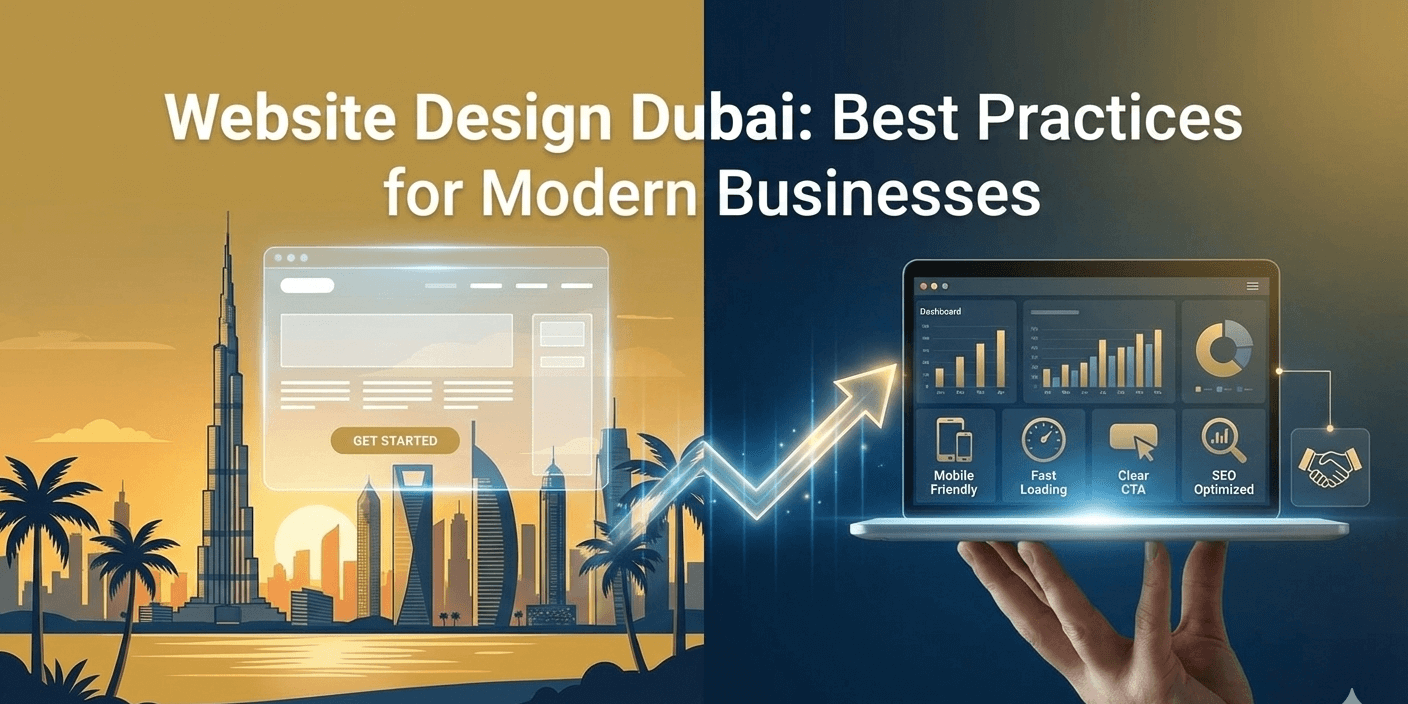
Dubai websites get judged fast. Really fast.
People browsing websites in the UAE are impatient. Not rude, just busy. They’re scrolling between meetings, WhatsApp messages, and emails. If your site doesn’t feel clear within a few seconds, they’re gone.
That’s why first impressions here matter more than people admit.
A strong hero section. A clear headline. A simple message. No guessing. When someone lands on your site, they should instantly know:
- What you do
- Who it’s for
- Why they should care
Anything else creates friction. And friction kills conversions.
Mobile-first is not a trend here. It’s reality.
Dubai is a mobile city. Phones are everywhere. Cafes, cars, offices, even meetings. If your website looks good on desktop but awkward on mobile, you’re losing most of your audience.
Mobile UX isn’t about shrinking things down. It’s about rethinking layout. Bigger buttons. Cleaner sections. Shorter paragraphs. Space to breathe.
Honestly, a mobile visitor should never have to pinch, zoom, or squint. If they do, they leave.
Speed decides trust before design does
This part surprises people.
You can have a beautiful site. Clean visuals. Elegant animations. But if it takes more than a few seconds to load, visitors won’t even see it.
Speed is invisible until it’s slow.
In Dubai, users expect fast everything. Delivery. Replies. Websites. A slow site quietly signals “unprofessional” even if the design is good.
That’s why smart website design focuses on performance early:
- Optimized images
- Clean code
- Reliable hosting
- Lightweight themes
Google PageSpeed Insights and GTmetrix exist for a reason. They show you what users feel but don’t say.
Design trends that actually work in Dubai
Not all trends are useful. Some look nice on Behance and fail in real life.
What works in the UAE tends to be simple, confident, and structured.
You’ll notice successful Dubai business websites often share a few traits:
- Neutral colors with one strong accent
- Clear typography, not fancy fonts
- Structured layouts that guide the eye
- Visual hierarchy that feels intentional
Minimal doesn’t mean boring. It means focused.
Trust signals matter more than clever visuals
Dubai customers are cautious. They want reassurance.
They look for signs that say, “This business is real.”
That’s why trust elements are critical in website design Dubai:
- Trade license or registration details
- Office location or service area
- Client logos or testimonials
- Real photos, not stock overload
Even small things help. A Google Maps embed. A WhatsApp button. A local phone number. These details reduce hesitation without saying a word.
Content layout should guide, not overwhelm
Ever landed on a website and felt lost? Too much text. Too many sections. No clear path.
Good design acts like a guide.
It gently pushes visitors forward. Scroll here. Read this. Click that.
Short sections work better than long walls of text. Headlines should answer questions, not sound clever. And spacing matters more than people realize. White space gives your message room to land.
Forms and CTAs should feel human
Here’s a mild contradiction: aggressive CTAs sometimes convert better. But in Dubai, subtle confidence often wins.
People don’t like feeling pushed. They prefer feeling invited.
Instead of shouting “BUY NOW,” softer prompts often perform better:
- “Request a callback”
- “Get a quick quote”
- “Let’s discuss your project”
Forms should also be short. Name. Phone. Email. That’s it. The more you ask, the fewer replies you get.
What’s behind the scenes matters too
Design isn’t only what you see.
The tech stack plays a quiet but powerful role:
- WordPress or Webflow for flexibility
- Secure hosting
- SSL certificates
- Clean CMS structure
A site should be easy to update. Easy to scale. Easy to connect with tools like Google Analytics, Search Console, or CRM systems.
Because a website that can’t grow with your business becomes a problem later.
Design alone won’t get you leads (and that’s okay)
Here’s the honest part.
A beautiful website without strategy is just decoration.
It might impress. It might get compliments. But leads come from structure. From intent. From understanding how users think.
That’s where conversion-focused design comes in. Pages built around user behavior. Content placed where people actually read. CTAs positioned where decisions happen.
Design supports strategy, not the other way around.
Why modern businesses think in funnels, not pages
Smart businesses in Dubai don’t treat websites as digital brochures anymore.
They treat them as entry points.
A homepage introduces. A service page educates. A form captures interest. Follow-ups do the rest.
When design and funnels work together, something changes. Traffic turns into inquiries. Inquiries turn into clients.
And that’s the real goal.
So, what should you do next?
If your current website looks okay but doesn’t bring leads, the issue isn’t luck. It’s structure.
If you’re planning a new website, don’t start with colors. Start with outcomes.
Need a website that actually gets leads? We build them.
Not flashy designs for awards, but conversion-focused websites that support real business growth in Dubai.
If that sounds like what you’re looking for, it might be time to rethink what your website is supposed to do.