Let’s be honest for a second.
Most business websites in the UAE look fine. Clean layouts, nice colors, smooth animations. And yet… they don’t convert. No calls. No form fills. No real business impact.
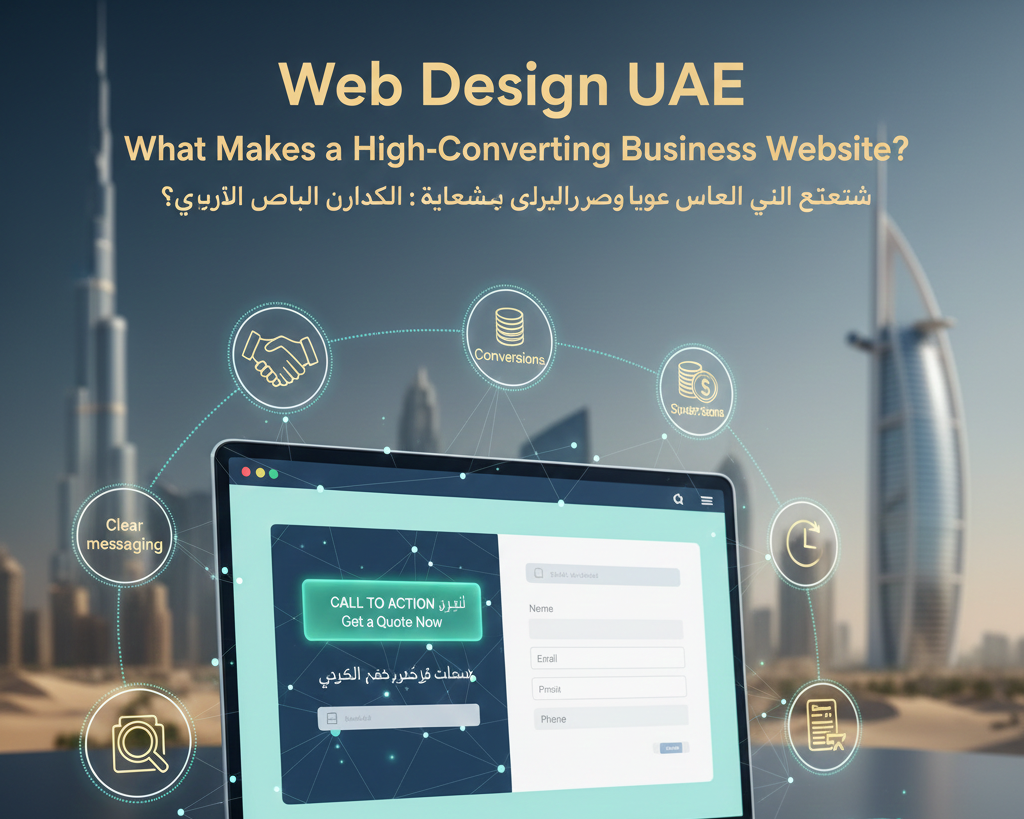
That’s the gap most companies don’t see when they search for web design UAE services. A website isn’t a digital brochure anymore. It’s a salesperson that works 24/7. If it doesn’t guide, reassure, and nudge visitors toward action, it’s just sitting there.
So what actually makes a business website convert in the UAE market? Let me explain.
Why web design UAE plays by different rules
Dubai isn’t a slow market. People skim fast, compare faster, and leave even faster. Your website has seconds, not minutes.
You’re also dealing with a mixed audience. Locals, expats, overseas investors, decision-makers checking from mobile phones between meetings. That mix shapes how design should feel. Polished, yes. But also clear, confident, and straight to the point.
Here’s the thing. A beautiful site that doesn’t answer basic questions quickly loses trust. And in the UAE, trust is everything.
Design vs results, a quiet misunderstanding
This might sound contradictory, but stay with me.
Good design matters.
Design alone doesn’t sell.
A high-converting website balances visuals with intent. Every section should quietly answer one question: “What should the visitor do next?”
When websites focus only on aesthetics, they forget structure. Forget flow. Forget psychology. That’s why many redesigns feel fresh but perform worse.
Conversion-focused web design flips the priority. Looks support clarity, not the other way around.
First impressions and trust signals that matter here
People don’t read websites first. They scan for reassurance.
In the UAE, visitors look for specific signals:
- Clear business identity
- Professional branding
- Real contact details
- Location relevance
- Social proof that feels authentic
Logos, certifications, testimonials, and even the tone of copy play a role. A vague headline like “We deliver innovative solutions” doesn’t help anyone. Visitors want to know who you help and how fast you can help them.
You know what? Even small things matter. WhatsApp buttons. Dubai phone numbers. Clear service areas. These details reduce hesitation.
Mobile-first isn’t optional anymore
Most traffic in the UAE comes from mobile. That’s not a trend. It’s the norm.
Yet many websites are still “desktop-first” with mobile as an afterthought. Text becomes cramped. Buttons too small. Forms annoying.
A high-converting site is designed mobile-first. Headlines stay readable. CTAs stay visible. Pages load quickly even on average connections.
If someone needs to zoom, scroll endlessly, or pinch the screen, you’ve already lost them.
Speed, clarity, and user patience
Here’s a hard truth. Visitors don’t wait.
If your site loads slowly, feels cluttered, or forces them to think too much, they leave. Especially in Dubai, where expectations are high and alternatives are one click away.
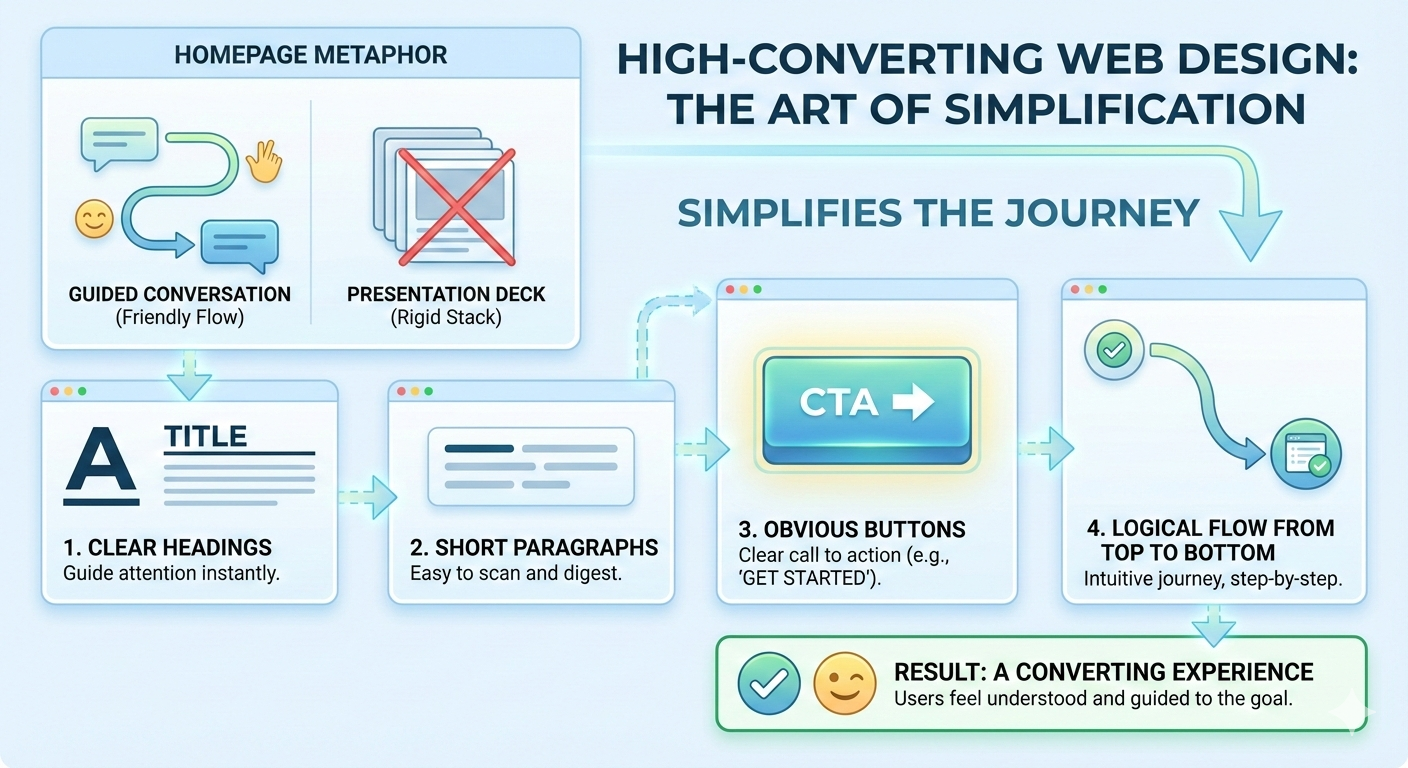
Content layout that guides instead of overwhelms
Most business websites try to say everything at once. That’s a mistake.
Good layout breaks information into digestible pieces. Above the fold, visitors should immediately know:
- What you do
- Who it’s for
- What action to take
As they scroll, content should answer objections naturally. Pricing concerns. Trust concerns. Process concerns.
Design supports this by using spacing, contrast, and visual hierarchy. Not flashy animations that distract from the message.
Conversion elements most UAE websites miss
This is where many sites fall short.
They have forms, but not strong reasons to fill them. They have buttons, but weak copy. They have services listed, but no clear outcomes.
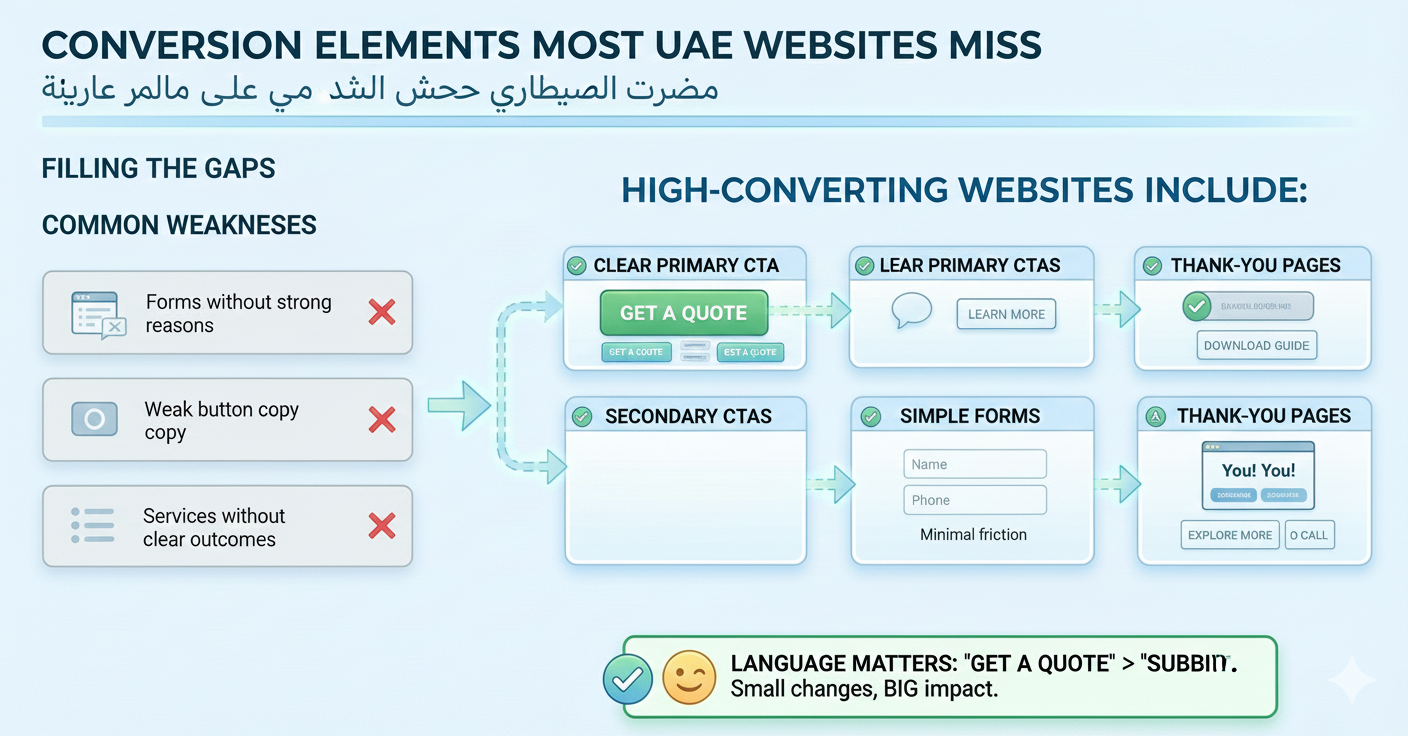
High-converting websites include:
- Clear primary CTA repeated naturally
- Secondary CTAs for hesitant visitors
- Simple forms with minimal friction
- Thank-you pages that guide next steps
And yes, language matters. “Submit” doesn’t convert as well as “Get a Quote” or “Request a Call.” Small changes, real impact.
SEO and design must work together
Some people think SEO ruins design. Others think design ignores SEO. Both are wrong.
Search engines reward websites that users enjoy using. Clean structure, fast load times, readable content, proper headings. All of that helps rankings.
A well-designed site supports SEO by:
- Making content easy to scan
- Highlighting important sections
- Structuring pages logically
That’s why web design UAE projects should never ignore search intent. Ranking without conversions is traffic without value.
Common mistakes businesses keep repeating
After reviewing dozens of local websites, the same issues show up again and again:
- Overloading the homepage with services
- Hiding CTAs too far down
- Using generic stock photos
- Writing copy that sounds impressive but says nothing
Ironically, many of these sites were expensive. Cost doesn’t equal clarity.
The fix isn’t more pages. It’s better thinking.
What a high-converting website really looks like
It doesn’t scream. It guides.
It speaks directly to the visitor’s problem. It shows credibility without bragging. It makes taking action feel easy, not risky.
The best business websites in the UAE feel calm, confident, and intentional. Nothing is random. Every section earns its place.
And here’s the mild contradiction. Simple websites often outperform complex ones. Not because they’re basic, but because they respect how people actually behave online.
Where Rajput Digital Marketing fits in
At Rajput Digital Marketing, we don’t design websites to look good in portfolios. We build them to convert.
Every project starts with understanding your audience, your offer, and your growth goals. Design decisions follow strategy, not trends.
If you’re looking for web design UAE services that focus on leads, clarity, and real business outcomes, we’re built for that.
If you want a custom website that works as a sales engine, not just an online presence, you can request a tailored quote and see what a conversion-focused build looks like.
Because a website shouldn’t just exist.
It should work.
# Web Design UAE
One Response